
Twin Tales in the Basin: Kemmerer and Diamondville’s History
Nestled in the heart of southwestern Wyoming, Kemmerer and Diamondville are more than just beautiful and adventure-filled towns. Rich in the outdoors, rooted in the mining industry, and renowned for its unique fossil beds, these communities are true gems in the Wild West. Here are a few fascinating points from Fossil Basin’s history!
Community Origins
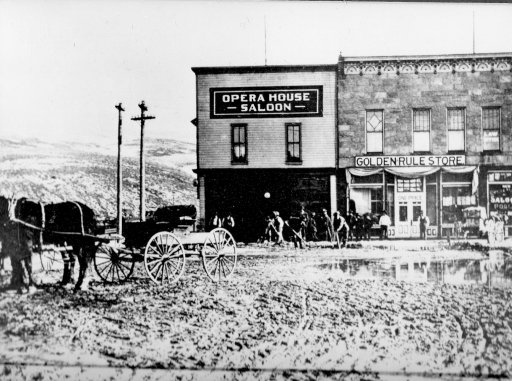
Established by 1897, Kemmerer was born as a coal mining community, founded by Patrick Quealy and Mahlon Kemmerer, whose partnership helped shape the town’s early development. Diamondville was established in 1884, by Harrison Church, who discovered coal and created the Hams Fork River Coal Company. Unlike many mining towns, Kemmerer was not owned by a single coal company. Instead, it encouraged private land ownership, allowing settlers to work the land for coal and ranching, fostering a sense of independence and community. Similarly, Diamondville encouraged people to create sustainable lives for themselves. The first settlers lived in a “shack town”, where shacks and dugouts were built near the mine site and Hams Fork River to improve transportation, water access, and the spirit of community amongst miners.

Mining
Coal mining contributed to the success of both towns, a key industry that sustained the local economy for decades. However, this success came with great risk. While both towns experienced mining tragedies, the most notable was the Frontier Mine disaster on August 14, 1923, where 99 miners lost their lives in a horrific explosion. This disaster remains one of Wyoming’s deadliest mining accidents and left a lasting mark on the community. Even today, local residents honor the memory of those lost miners, reflecting the close-knit, resilient spirit of both communities. Kemmerer and Diamondville began from the hard work and dedication of the region’s miners and their families; their legacy continues to move forward.
Another pivotal chapter in Kemmerer’s history was written by James Cash Penney. In 1902, Penney opened the first J.C. Penney store, originally called the Golden Rule Store, on the town’s small main street. The store’s success eventually blossomed into one of America’s most iconic retail chains. Visitors to Kemmerer can still shop at the original “Mother Store,” which has become a historic site. Penney’s legacy lives on in the town, where his former home is still preserved nearby at Triangle Park, offering a glimpse into his life and the origins of the department store empire he built.
Fossil Digging
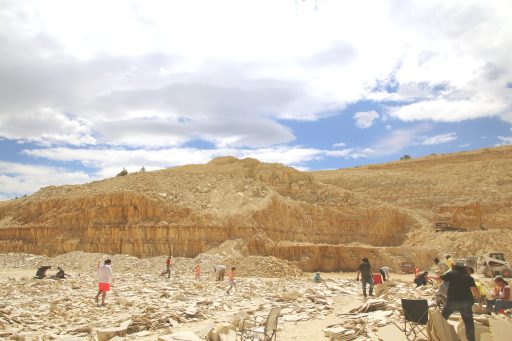
Beyond mining and retail, Kemmerer and Diamondville are a treasure trove of paleontological significance. Fossil Basin exists over the Green River Formation, which is particularly rich in fossils from the Eocene epoch. Fossil digging in this region gained popularity in the mid-20th century, as scientists and amateur collectors alike uncovered incredibly well-preserved fossils from what was once a subtropical lake. The fossils, which include ancient fish, turtles, and even early mammals, have drawn visitors from around the world. Today, visitors can dig in quarries during the summer and shop for hand-chiseled fossils in one of Kemmerer’s shops! Additionally, Fossil Butte National Monument, located just outside of town, offers visitors a chance to see these ancient wonders up close and even participate in fossil digging excursions.
Kemmerer and Diamondville’s histories are a unique blend of industry, tragedy, community, and scientific discovery. From its coal-mining roots and the devastating “the 99” disaster, to the birth of a retail empire and 52-million-year-old fossil beds, both towns have evolved into a true explorer’s paradise. Experience it for yourself and make your own history when you visit Fossil Basin!
About Author
